Tekion is pushing deeper into AI across dealership operations, with new tools aimed at accounting, sales, compliance, and daily execution. If you are trying to understand what Tekion is adding, what problems these tools solve, and where they fit inside a dealership, the big idea is simple: Tekion is building AI directly inside its own platform instead of layering disconnected tools on top.
That matters because dealership teams do not just need answers. They need speed, consistency, auditability, and the ability to act inside the same system where the work already happens.
Table of Contents
- What is Tekion doing with AI?
- Why Tekion AI is different from generic AI tools
- Tekion Accounts Payable AI: what it does
- Tekion Salesperson AI: what it does
- T1 Pro: Tekion’s larger AI interface for the whole dealership
- What Deal Guard and F&I manager AI appear to cover
- How Tekion ties all of this together
- What real dealership value looks like
- Common mistakes dealers make with AI
- How to evaluate whether Tekion AI is a fit for your store
- What Tekion means by an AI-native dealership
- Bottom line on Tekion’s latest AI direction
- FAQ
What is Tekion doing with AI?
Tekion is positioning AI as a native part of the dealership platform, not a separate app. The focus is on using shared dealership data, shared workflows, and a single interface so teams can move from insight to action without bouncing between systems.
The new AI capabilities highlighted here center on three areas:
-
Accounting AI, starting with accounts payable automation
-
Sales AI, starting with lead response and follow-up
-
Operational AI, through a broader interface called T1 Pro
There is also mention of an F&I manager AI, with an initial compliance-focused capability called Deal Guard.
Why Tekion AI is different from generic AI tools
A lot of businesses are asking the wrong question. They ask, “Can AI summarize my data?” That is not the hard part.
The real question is this: Can AI work inside the exact environment where your people sell cars, process invoices, manage deals, and serve customers?
According to the product direction described here, Tekion is trying to solve four issues generic AI tools do not fully solve on their own:
-
Security and compliance for sensitive customer and deal information
-
Access to live dealership context across customers, deals, repair orders, and workflows
-
Actionability, not just reporting or summarizing
-
Precision and consistency needed for operating a dealership down to dollars and cents
That is the difference between a chatbot that gives a decent answer and a system that can support real execution.
Tekion Accounts Payable AI: what it does
One of the clearest use cases is accounts payable. For many dealerships, AP is still chaotic. Invoices arrive through multiple channels, get handled manually, and create bottlenecks that hit approvals, cash visibility, and month-end close.
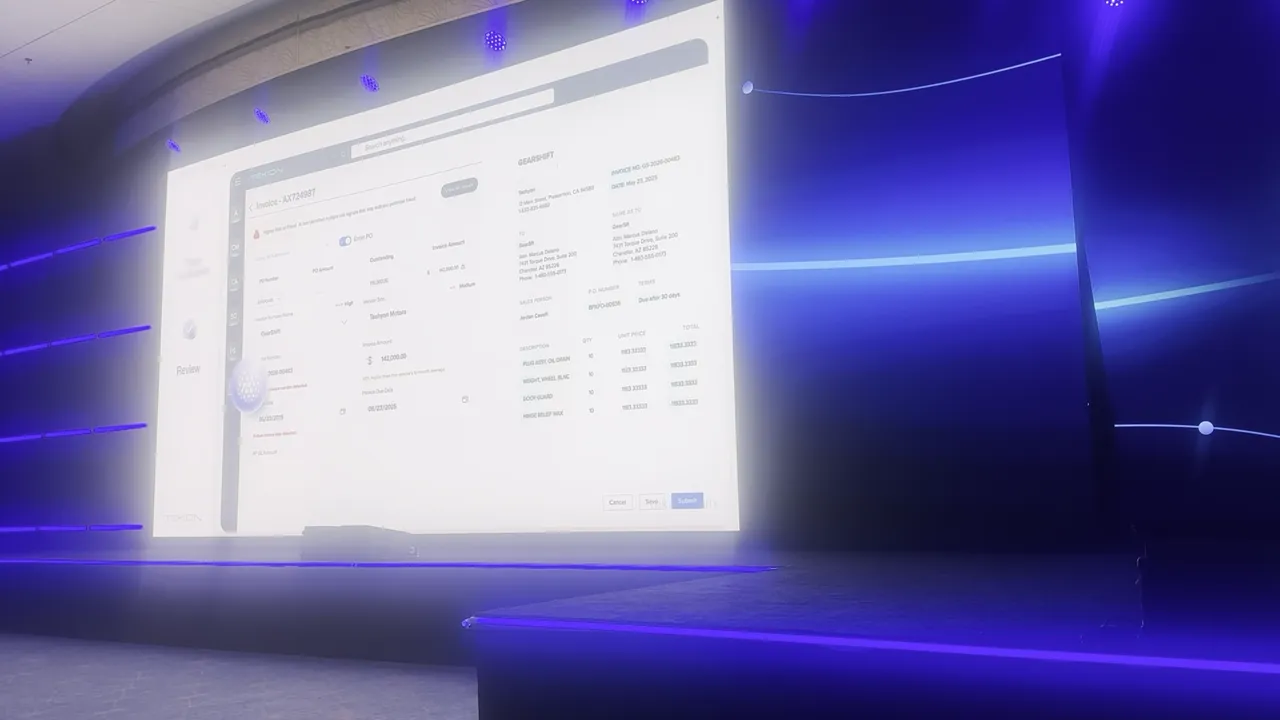
Tekion’s accounts payable AI is described as an AP solution built natively inside its dealership system.
Core capabilities include:
-
Reading incoming invoices automatically
-
Extracting invoice data without manual keying
-
Matching against existing purchase orders
-
Checking for duplicates
-
Flagging issues for review
-
Routing invoices for approval
-
Automatically documenting each step and approval
Why that matters for accounting teams
When AP lives inside the same environment as the rest of the accounting process, it can reduce friction in a few meaningful ways.
-
Less manual entry means fewer keying mistakes
-
More consistent coding can improve comparability across stores or groups
-
Better visibility helps teams see invoice status, pending approvals, and exceptions
-
Clear audit trails can reduce confusion around who approved what and when
-
Cash forecasting benefits come from seeing future obligations and unrecorded liabilities sooner
One dealership example shared in the source material also tied the efficiency gains to staffing leverage. The result was enough improvement that an AP role was not replaced after an employee departure.
How fast is the AP workflow?
The product claim presented was dramatic: a process that used to take days from invoice receipt to submission for approval can now happen in seconds.
The point is not just speed. It is that speed comes with documented approvals and less manual handling, which is where a lot of accounting pain typically lives.
Tekion Salesperson AI: what it does
The second major Tekion AI announcement focuses on lead management. Dealerships lose revenue when leads come in after hours, sit too long, or get inconsistent follow-up.
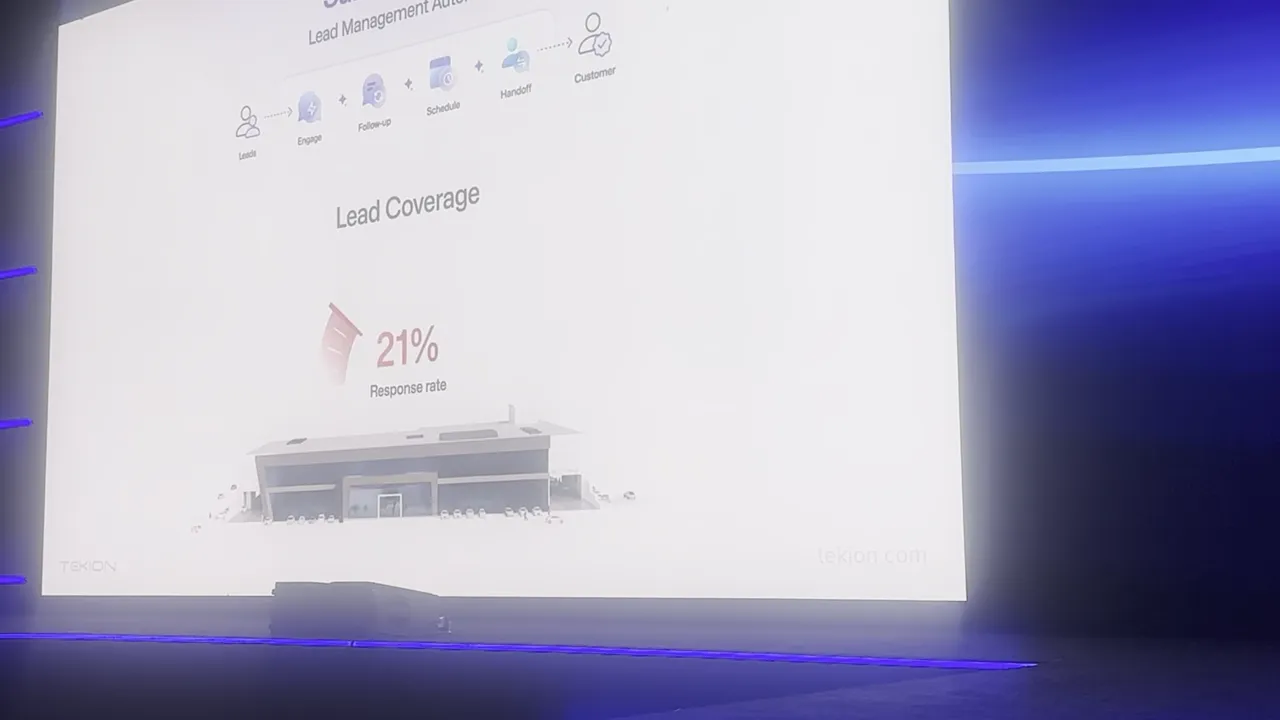
Salesperson AI is described as a CRM AI agent built natively inside the broader platform.
Its role is straightforward:
-
Respond to leads quickly, including outside business hours
-
Answer questions about pricing, features, and availability
-
Schedule appointments from the conversation
-
Preserve full conversation history for handoff to a human rep
-
Continue follow-up with prospects until they are ready to move forward
What problem does this solve?
The issue is not just lead volume. It is lead coverage.
If no one responds quickly, warm prospects cool off. If a rep steps in without context, the conversation resets. If follow-up depends entirely on whoever is in the building, opportunities get missed.
Tekion’s approach is built around continuity. The AI can start the interaction, keep the context, and pass that context forward so the team can work warmer leads instead of starting from scratch.
Who benefits most?
This is especially relevant for stores without a dedicated BDC function. The claim made here is that many dealers do not have that layer of lead coverage, so AI can fill part of the gap by providing immediate response and follow-up inside the system itself.
Share Tekion One Notes |
|
|
| Learn more |
T1 Pro: Tekion’s larger AI interface for the whole dealership
If the first two products solve specific departmental problems, T1 Pro appears to be the broader operating layer.
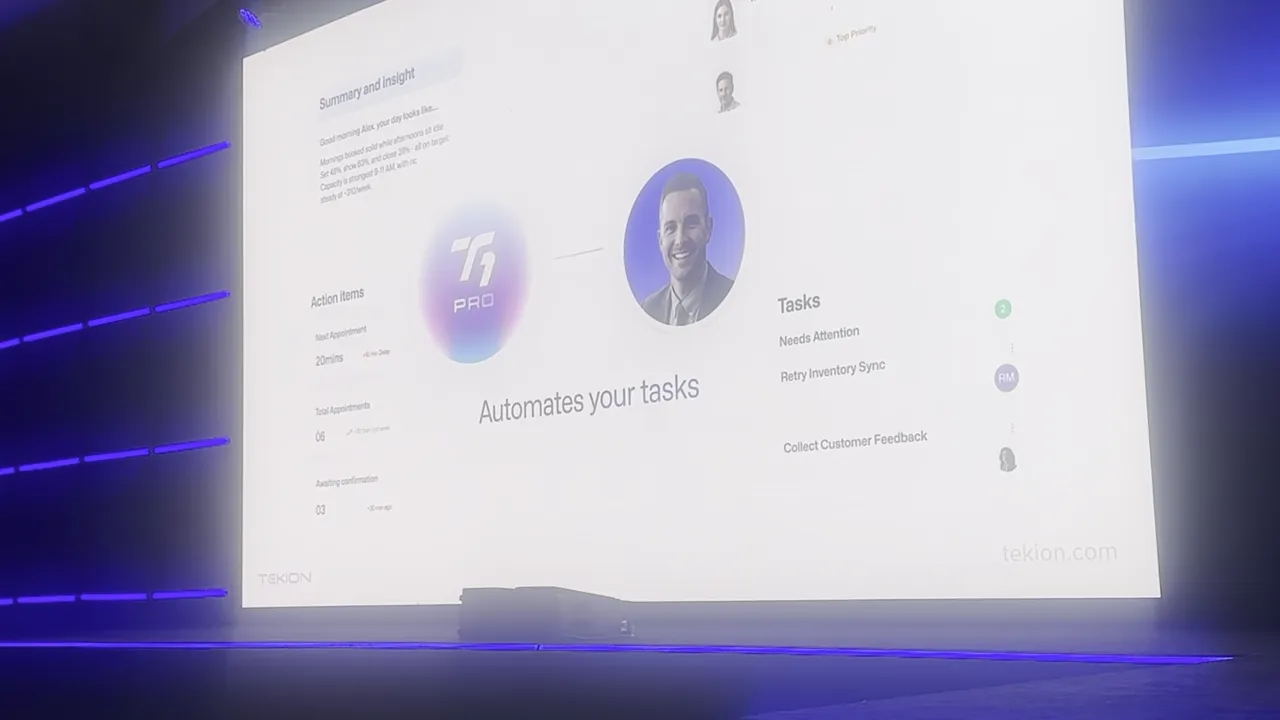
Tekion describes T1 as a single AI interface connected to dealership data and workflows. T1 Pro is presented as the next step, designed to act more like an on-call analyst and execution assistant across departments.
Instead of forcing managers to run reports, switch screens, and chase updates, T1 Pro is meant to surface what matters and help move the work forward.
What T1 Pro is supposed to do
-
Provide a morning brief with priorities
-
Rank leads by priority
-
Order tasks by urgency
-
Highlight pending handoffs and follow-ups
-
Support service advisors with summarized customer history, open recalls, and declined work
-
Help compare lease versus loan scenarios in one step
-
Coordinate work across multiple AI agents and departments
From reporting to execution
This is where the Tekion message gets stronger.
Most platforms can show you what happened. Fewer can tell your people what to do next. Even fewer can help trigger that action inside the workflow.
The examples shared around T1 Pro point to exactly that shift:
-
Identifying top sales actions that could drive revenue that day
-
Spotting bottlenecks that prevent a deal from being booked and funds collected
-
Analyzing service retention gaps
-
Generating a list for outreach or marketing follow-up
-
Recommending campaigns and then taking action once approved
That last point is key. Tekion is not framing AI as a replacement for management judgment. The model described is AI that recommends and, with approval, executes.
What Deal Guard and F&I manager AI appear to cover
The material also introduces an F&I manager AI, beginning with a capability called Deal Guard.
Only limited details are provided, so the safe takeaway is this: Tekion is extending AI into compliance-sensitive parts of the deal process, with Deal Guard positioned as an early compliance-focused function.
What is emphasized is the need to make compliance easier while keeping operators focused on running the business. Since no deep feature breakdown is given, it is best to view this as an early launch area rather than a fully detailed module description.
How Tekion ties all of this together
Here is the core strategy behind Tekion’s AI direction.
Instead of separate AI tools for separate departments, the platform is being presented as one connected system where:
-
Accounting AI handles invoice flow and visibility
-
Sales AI handles lead response and follow-up
-
F&I AI supports compliance-related tasks
-
T1 Pro acts as the interface and orchestration layer across the business
That is what Tekion means by an AI-native dealership. Not random automation. Not isolated bots. One operating system with AI built into the process.
What real dealership value looks like
When you strip the hype away, dealership leaders usually care about five things:
-
Can this save time?
-
Can this reduce errors?
-
Can this improve visibility?
-
Can this help people execute?
-
Can this show ROI?
Those are exactly the value themes stressed around Tekion.
1. Efficiency
Accounting staff spend less time keying invoices. Managers spend less time hunting through reports. Sales teams spend less time chasing cold or stale leads.
2. Accuracy
Direct extraction from invoices can reduce manual mistakes. Consistent coding can improve reporting quality. AI-driven context can reduce dropped information during handoff.
3. Visibility
Leaders can see invoice status, exceptions, future liabilities, and task priorities without digging through disconnected tools.
4. Scalability
When workflows are more automated and better organized, the same team can often handle more volume with less friction.
5. Actionability
This may be the biggest point. Tekion is not just pushing dashboards. It is pushing guided next steps and in some cases approved execution.
Common mistakes dealers make with AI
If you are evaluating Tekion or any dealership AI platform, here are the traps to avoid.
Assuming AI summaries equal business impact
A clean summary is not the same as operational improvement. If the AI cannot connect insight to actual workflow, your people still do all the heavy lifting.
Ignoring compliance and data security
Using general-purpose AI with sensitive dealership or customer information raises obvious concerns. That is one of the reasons native platform integration matters so much in this category.
Buying point solutions that do not talk to each other
One tool for leads, another for approvals, another for reporting, another for service outreach. That is how dealerships create confusion, duplicate work, and lost context.
Failing to measure ROI
Tekion also emphasized an ROI dashboard concept for AI. That is the right instinct. If AI is treated like an expense with no accountability, enthusiasm fades fast.
How to evaluate whether Tekion AI is a fit for your store
If you are considering these capabilities, ask practical questions.
For accounting leaders
-
How many invoices are still entered manually?
-
How often do duplicate payments or approval gaps happen?
-
How much visibility do you have into unrecorded liabilities before month-end?
-
How much staff time is spent just moving invoices through the process?
For sales leaders
-
How quickly are leads answered after hours?
-
How consistent is follow-up across reps?
-
How often does context get lost when a human takes over?
-
Do you have enough BDC coverage for current lead volume?
For dealer principals and GMs
-
How much time do managers spend gathering information instead of acting on it?
-
Can your current systems prioritize the most important actions for each department?
-
Can your platform move from insight to execution without leaving the system?
-
Do you have a way to measure the value AI produces over time?
What Tekion means by an AI-native dealership
The phrase can sound like marketing language unless you define it.
Based on the capabilities described, an AI-native dealership means:
-
AI is built into the platform from the ground up
-
Dealership data is connected across departments
-
AI can understand context across deals, customers, service, and accounting
-
Teams can move from question to answer to action in one environment
-
Performance and ROI can be tracked rather than guessed
That is a stronger model than simply pasting dealership data into a standalone AI tool and hoping for useful output.
Bottom line on Tekion’s latest AI direction
Tekion is expanding beyond core system functionality into workflow automation and operational decision support. The biggest near-term wins appear to be in accounts payable, lead response, and manager productivity.
If these tools deliver as described, the upside is not just convenience. It is tighter controls, faster execution, better visibility, and less wasted labor across the dealership.
The bigger takeaway is this: AI becomes valuable when it is embedded where the work already happens. That is the lane Tekion is trying to own.
FAQ
What is Tekion?
Tekion is a dealership technology platform used to connect functions such as sales, service, accounting, and workflows inside one system. The AI direction described here expands that platform with native tools for AP automation, lead management, compliance support, and operational decision-making.
What is Tekion Accounts Payable AI?
It is an accounts payable automation tool built inside Tekion’s system. It reads invoices, extracts data, checks for duplicates, matches against purchase orders, routes approvals, and creates a documented audit trail with reduced manual entry.
How does Tekion Salesperson AI help dealerships?
It helps respond to leads quickly, answer common questions, schedule appointments, preserve conversation history, and continue follow-up inside the CRM workflow. The goal is better lead coverage and smoother handoff to human reps.
What is T1 Pro in Tekion?
T1 Pro is presented as a broader AI interface for dealership operations. It is designed to surface priorities, summarize important context, identify next actions, and help teams move from insight to execution across departments.
Is Tekion replacing dealership staff with AI?
The direction described here is more about reducing manual work, improving precision, and helping teams act faster. In some workflows, AI can reduce the need for repetitive labor, but the model emphasized is AI assisting and executing with approval rather than eliminating management oversight.
Why use Tekion AI instead of a general AI chatbot?
The main reasons highlighted are security, compliance, access to live dealership context, and the ability to take action inside the same platform. General AI tools may summarize information, but they do not automatically provide the same native workflow control or system-level execution.


